An artificial turf installation is a construction project with a finish that looks like landscaping. The surface is the last thing to go down, and everything that decides how the yard performs — the excavation, the stone, the compaction, the slope — happens before it. This is the sequence a competent crew follows in Boise, so a homeowner can follow a job as it runs and spot the steps that get skipped.
Planning: Layout, Utilities and Scope
Before anyone digs, three things have to be settled: the layout, the utilities and what the quote covers. Turf comes in fixed roll widths, so the roll plan decides where seams fall — and seams belong away from high-traffic routes and away from the main sight line out of the house. Measure the widest and longest points, add a small buffer for trimming, and check for irrigation lines, sprinkler pipes and buried cables before a shovel goes in.
Budget against the published range for a full professional installation, which runs 8 to 15 per square foot installed, and compare at least three quotes written to the same scope of base work. A quote for grass without a matching base scope is not a comparable number.
Excavation: Strip Everything Organic
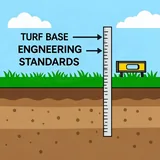
Existing turf, weeds, roots and topsoil come out to a consistent depth, and that depth is a specification: 2 to 3 inches for a light residential lawn with no pets, a 4-inch minimum for a yard with dogs, and up to 6 inches where heavy clay demands a deeper drainage layer. Anything organic left below the surface decomposes, loses volume and takes the turf down with it, which is why a shallow skim is the first signature of a yard that will develop dips.
Two details matter here: a clearing radius around trees and shrubs so root systems survive, and a final look for rubble or builder debris before any stone goes down.
The Base: Stone, Lifts and Density
The base is clean, washed, angular crushed stone — typically a 3/4-inch down to 1/4-inch grade such as #57 crushed stone — spread over the excavation and compacted in damp 2-inch lifts with a plate compactor to 95% Standard Proctor density, then topped with a thin bedding layer of 3/8-inch clean chip stone that smooths the surface without sealing it. Rounded pea gravel does not qualify, because it cannot lock and the turf above it moves.
Two numbers control the quantity and the fall. A 4-inch base takes roughly 1.33 tons of stone per 100 square feet, and the order should carry about 10% extra to cover the volume lost to compaction. The finished base grades to a 1% to 2% slope running away from structures, and it sets so the compacted surface finishes 1.5 inches below the top of the edging.
Edging, Turf and Seams
Perimeter edging is the frame that stops the base and the turf from migrating. With it set, the turf is rolled out and left to relax in the sun — a couple of hours at minimum, up to a day — so packaging creases flatten. The pile should lean toward the main viewing angle, and every roll should run the same way.
Seams are where a cheap job shows itself. A proper seam trims a few tufts back from each edge to expose clean backing, leaves a gap of a millimeter or two between the rolls, lays jointing tape, and bonds the two edges with an outdoor polyurethane turf adhesive applied in dry weather. Edges are then trimmed from the underside and fixed to the border, so no sparse, trimmed edge is left visible.
Infill, Brush-In and Settling
Infill is ballast with three jobs: it weighs the system down, it props the blades upright so the lawn keeps looking new, and it shields the backing from UV. It is spread evenly and brushed down against the pile to settle at the base of the fibers. In a pet yard the infill also carries the odor work — zeolite or an antimicrobial product, not untreated silica sand, which absorbs liquids and holds them.
The job is not finished the day the grass is down. The published window from signed agreement to completion is two to six weeks, and the last part of it is settling: light use only for the first day or two, then a walkthrough for loose pins, exposed adhesive and thin spots in the infill.
What the Sequence Tells You About a Quote
A quote that names the excavation depth, the stone grade, the lift thickness, the compaction target and the slope is a quote for an engineered yard. A quote that only describes the grass is a quote for a surface. Boise Artificial Turf Pros is an independent matching service, not a contractor. We do not install, inspect, repair or warranty turf work. We match homeowners in Boise and across the Treasure Valley with local providers — up to 3 matches, within one business day, and 100% free.
Frequently asked questions
How long does an artificial turf installation take?
The published window is two to six weeks from signed agreement to completion, depending on scope, and the final part of that is a settling period with light use only for the first day or two.
How deep is the excavation?
Two to three inches for a light residential lawn with no pets, a 4-inch minimum for a yard with dogs, and up to 6 inches where heavy clay needs a deeper drainage layer.
What stone goes under the turf?
Clean, washed, angular crushed stone — typically a 3/4-inch down to 1/4-inch grade such as #57 — compacted in damp 2-inch lifts to 95% Standard Proctor density, topped with a thin 3/8-inch clean chip bedding layer.
How much stone does the base take?
Roughly 1.33 tons per 100 square feet at a 4-inch depth, and about 1 ton per 100 square feet at a 3-inch depth, ordered with roughly 10% extra to cover the volume lost during compaction.
How should the base be sloped?
The finished base should hold a 1% to 2% fall away from the house and any structures, with the compacted surface 1.5 inches below the top of the edging so turf and infill finish flush.
Sources
- USDA-NRCS Web Soil Survey (native soil, drainage class and depth to water table for a parcel)
- USDA-NRCS Official Soil Series Descriptions (clay and hardpan layers that change base depth)
- National Weather Service — local climate pages and station records (rainfall and heat load)
Related
Artificial Turf services in Boise
Boise Artificial Turf Residential Turf
A residential turf installation is a drainage and sub-base project that ends in a lawn, and the published numbers only make sense once you know which of the two you are paying for.

Boise Artificial Turf Pet Turf
Pet turf is judged by what happens underneath it, not by how the blades look, and the published specification is a deeper, fully draining base plus an infill that changes the chemistry of the yard.
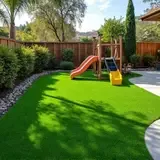
Boise Artificial Turf Playground Turf
A playground surface is bought for one number - the fall height it is rated to - and everything else about the installation serves that number.
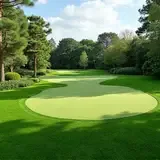
Boise Artificial Turf Putting Greens
A backyard putting green is a shaped base with a surface stretched over it, and the published specification starts with the speed number the surface has to deliver.
Boise Artificial Turf Commercial Turf
Commercial turf is published as a high-traffic, high-drainage surface, and the two numbers that decide whether it works are the annual hours it is rated for and how fast the base sheds water.
Areas we serve
Boise
Artificial Turf in Boise, ID - costs, water and soil notes.
Meridian
Artificial Turf in Meridian, ID - costs, water and soil notes.
Nampa
Artificial Turf in Nampa, ID - costs, water and soil notes.
Caldwell
Artificial Turf in Caldwell, ID - costs, water and soil notes.
Eagle
Artificial Turf in Eagle, ID - costs, water and soil notes.
Kuna
Artificial Turf in Kuna, ID - costs, water and soil notes.
Star
Artificial Turf in Star, ID - costs, water and soil notes.